Most people think of window cleaning as a glass job. In Montana, the glass is usually the easy part. What actually determines whether a window looks clean — and whether it still slides, seals, and drains the way it should — is the sill and the track underneath it.
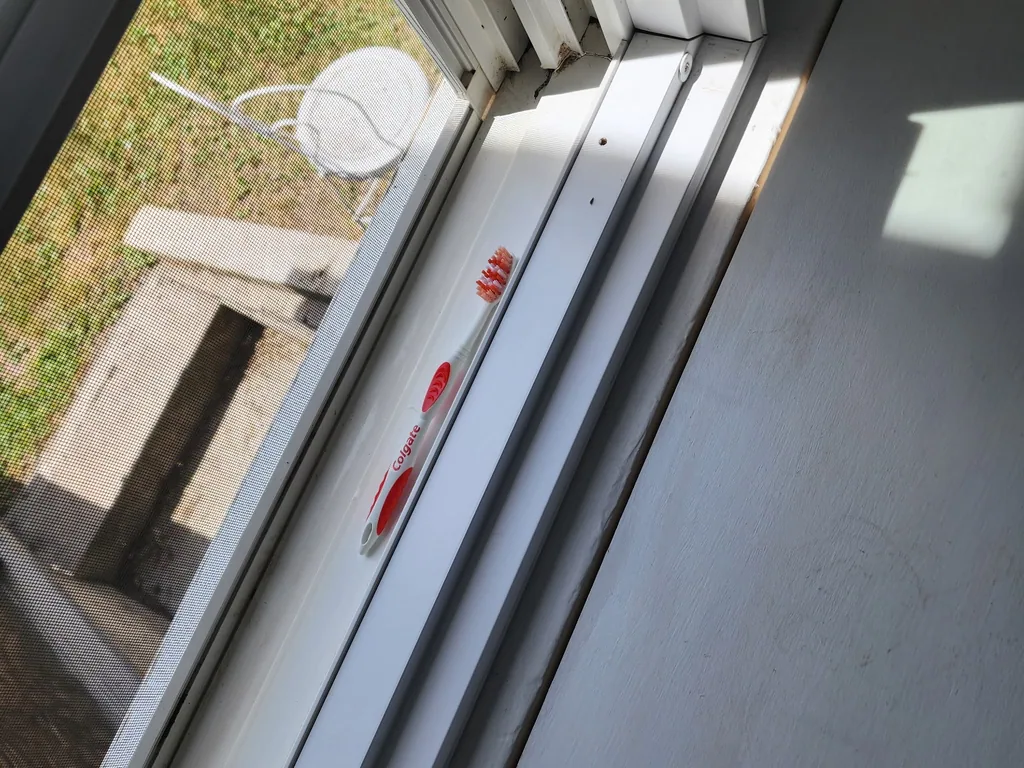
What ends up in a Montana window track
Over a single year, a window track in Livingston or the Paradise Valley collects a specific, predictable mix:
- Spring gravel dust from road sanding, which blows in the moment you open a window in April
- Summer pollen and cottonwood fluff, which mats together once it gets damp
- Wildfire-season ash in late summer, which is fine enough to work into every corner
- Insects and spider webbing, especially in tracks that stay shut
- Winter condensation, which turns all of the above into a black, packed grime along the bottom channel
That last step is the one that catches people out. Dry dust vacuums out easily. Once it has been wet through a freeze-thaw cycle, it sets into the track and has to be broken up by hand — which is why our window cleaning work involves a detailing brush, not just a squeegee and a cloth.
The best times to clean windows here
There are two windows in the year that make the most sense:
Late spring, after the last thaw. By then the road dust has settled, the snow is gone, and you have cleared out everything winter put in the track. This is the clean that actually changes how the house feels — it is the first time all year you get full, unfiltered light back.
Early autumn, after fire season. Ash is the single worst thing for glass because it is alkaline and slightly abrasive; wiping it dry can leave fine scratches. Getting it off before the first freeze means it never becomes part of that packed winter grime.
If you only do it once a year, do it in late spring. If you rent your place to guests, tie it to your shoulder seasons instead — see below.
Why screens matter more than people expect
A clean pane behind a dusty screen still reads as a dirty window. Screens hold a surprising amount of fine dust, and because the mesh diffuses light, that dust costs you more visible brightness than an equivalent film on the glass. Screens get wiped or rinsed as part of the job for exactly this reason.
Hard water is the one thing to catch early
Much of the water around here is hard. Where sprinklers throw onto glass, or where runoff comes off a roofline onto a lower window, mineral deposits build up in visible rings. Caught early they come off with normal work. Left for several seasons, the minerals etch into the glass surface itself — at that point no amount of cleaning fully restores it, because the damage is in the glass, not on it.
If you can see faint white rings that do not wipe away, that is the point to deal with them rather than wait another year.
For rentals and second homes
If your property sits empty between stays, windows are one of the details guests notice immediately — a mountain view through a hazy pane is the fastest way to make a nice place feel neglected. Most hosts we work with fold window cleaning into a seasonal reset rather than every turnover: once when the place opens up for the season, once when it closes down. That pairs naturally with cabin and vacation home cleaning.
A reasonable expectation
Interior glass, sills, and tracks are the core of the job, and exterior panes get cleaned wherever they can be safely reached from the ground or a short step. Tall or second-storey exteriors are worth assessing in person rather than guessing at — we will tell you honestly what is reachable.
Thinking about timing for your place? Call or text Shannon at (406) 920-9875, or request a quote and we will work out a schedule that fits the season you are heading into.